Services
Geotechnical AnalysisSoftwareM&A Case Studies About Contact Us
Advisory · Geotechnical Analysis / Software / M&A

Modeling, methodology, and the multiple.

Fredlund Geotechnical is the advisory practice of Murray Fredlund — built from three decades founding and scaling a geotechnical software company, selling it, and then spending eight years inside the acquirer steering its product strategy. We bring that same operator's view to firms doing the analysis and the companies building the tools they run on.

Where Fredlund Geotechnical sits A Venn diagram of three overlapping circles — Geotechnical Analysis, Software, and M&A — with FG Advisory at the centre where all three meet. GEOTECHNICAL ANALYSIS SOFTWARE M&A FG ADVISORY
FIG. 01 — WHERE THE PRACTICE SITS OPERATOR-LED
1997–2026
building and operating geotechnical software and advisory practices
1st
commercial 3D slope stability software brought to the geotechnical market
30%+
YoY growth built through SoilVision's marketing & sales function
1 exit
SoilVision Systems, acquired by Bentley Systems in 2018
01 · The Constraint

Good technical work. Inconsistent commercial and operational discipline.

Geotechnical analysis firms rarely lose work because the modeling is wrong. The constraint is usually how consistently that modeling gets done, reviewed, and sold — especially past a single office. Software companies serving this market run into a related problem: strong engineering, unclear go-to-market. And firms approaching a sale often haven't built the pricing history or founder-independence buyers pay a premium for.

01

Numerical modeling methodology varies office to office, so results — and liability — do too

02

QAQC catches errors after the report is stamped, not before

03

Report reviews happen informally, if at all, before a critical deliverable goes out the door

04

A software roadmap gets built on internal opinion instead of market validation

05

A founder is still the main reason the firm is worth what it's worth

02 · How We Help

Three places we get involved

Each pillar draws on the same background: building a geotechnical analysis and software business, and taking it through a sale.

01 / GEOTECHNICAL ANALYSIS

Geotechnical Analysis

Standardizing Analysis Methodology

Protocols for managing numerical modeling analysis across a multi-office environment, built to protect margin as much as consistency.

QAQC Procedures

Numerical modeling procedures that catch errors before they reach a stamped report.

Report Reviews

Independent, critical review of geotechnical numerical modeling reports — slope stability, groundwater/seepage, stress/deformation, and consolidation analysis — checked for validity before they’re issued.

02 / SOFTWARE

Software

Visioning Process

Defining what the product becomes next, and for whom, before more engineering time goes into it.

Market Validation

Testing whether the market actually wants what’s being built, before the roadmap commits to it.

Tech Stack

Architecture decisions made once, not re-fought in three years.

QAQC

Engineering-grade quality control applied to the software itself.

Marketing & Sales

A go-to-market motion built for a technical product sold to technical buyers.

Digital Twins

Building a digital twin framework to improve visualization and data flow for your engineering project.

03 / M&A

M&A

Exit Readiness

Solidifying the justification for a healthy multiple and positioning a firm well in the years leading up to a sale. Buyers pay a premium for a firm with a solid pricing and sales history that doesn’t rely on its founder.

Sale Process Support

Advising on the transaction itself: establishing the negotiating points and protecting value, managed by someone who has been through the seller’s side of the process.

Acquisitions & Integrations

Managing growth through targeted acquisitions on the buyer’s side, and the integration work in the years following.

03 · How a Software Engagement Runs

Four software stages, tied to a decision

STAGE 1

Diagnose

Review methodology, QAQC history, product roadmap, or deal readiness — whichever is in scope.

STAGE 2

Prioritize

Identify the one or two constraints actually limiting margin, quality, or valuation.

STAGE 3

Redesign

Build the new protocol, roadmap, or transaction structure with the team that has to run it.

STAGE 4

Execute

Stay through implementation far enough that it sticks after the engagement ends.

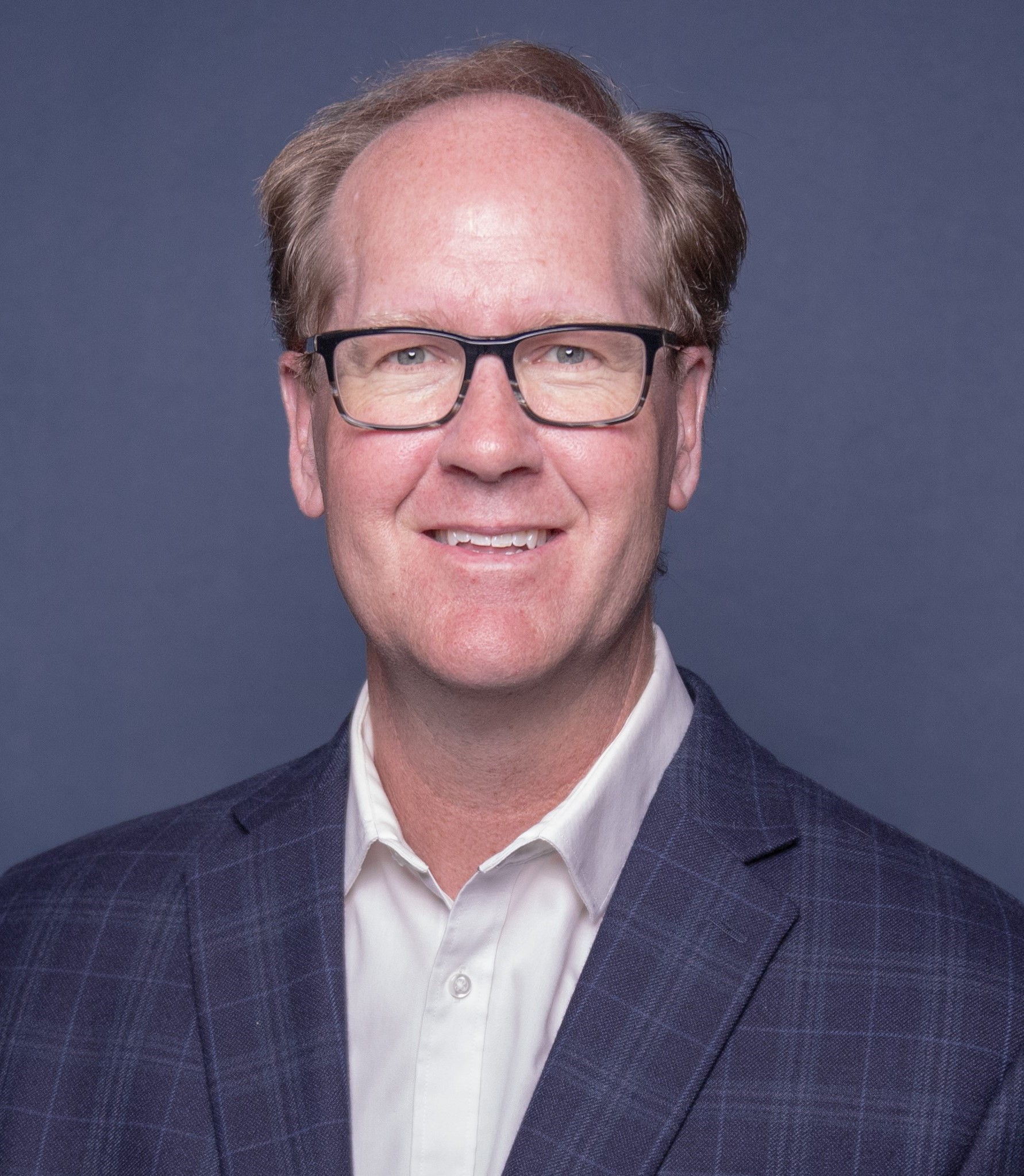
Murray Fredlund, founder of Fredlund Geotechnical
M. FREDLUND
04 · About

Murray Fredlund, Ph.D.

Fredlund Geotechnical is the advisory practice of Murray Fredlund, built from three decades spent on both sides of the geotechnical industry — the modeling, and the company that sells it.

In 1997, Murray founded SoilVision Systems, a geotechnical software company built around slope stability, groundwater, and consolidation analysis. SoilVision brought the first primary 3D slope stability software to the commercial geotechnical market, built a marketing and sales function that drove 30%+ year-over-year growth, and extended the software into the market through numerical modeling consulting services. Bentley Systems acquired SoilVision in 2018.

Murray then spent eight years at Bentley leading the shift of its geotechnical line from a product-based to a solution-based business — establishing standard numerical modeling workflows across the civil market, building the dashboards used to identify growth markets, and championing digital twins across civil engineering.

Fredlund Geotechnical exists to bring that same operator's view — technical, commercial, and transactional — to geotechnical analysis firms and the software companies that serve them.

05 · Track Record

What this looks like in practice

Fredlund Geotechnical is a new practice — the track record below is Murray's own operating history, not prior advisory engagements.

SoilVision Systems Ltd.

1997–2018
Founder & CEO
  • Founded a geotechnical software company built around slope stability, groundwater, and consolidation analysis
  • Pioneered 3D analysis in the geotechnical industry — brought the first primary 3D slope stability commercial software to market
  • Built a marketing and sales function that drove 30%+ YoY growth
  • Extended the software into the market through numerical modeling consulting services
SoftwareSales Buildout3D ModelingAcquired by Bentley

Bentley Systems

2018–2026
Product & Solutions Leadership
  • Moved Bentley's geotechnical line from a product-based to a solution-based model
  • Established standard numerical modeling workflows across the civil market
  • Built business dashboards used to identify growth markets
  • Championed digital twins within the civil engineering market
Solution StrategyWorkflow StandardsGrowth AnalyticsDigital Twins
06 · Case Studies

Selected case studies

Numerical-modeling engagements across seepage, slope stability, and consolidation — including forensic analyses of high-profile tailings facilities.

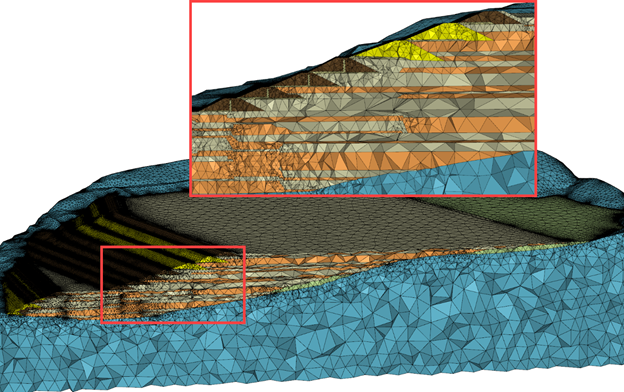
3D finite-element seepage mesh of the Córrego do Feijão tailings dam, with an inset showing the layered stratigraphy.
CASE 01

Feijão Forensic Seepage Analysis

2020 · Expert-panel forensic investigation

After the catastrophic January 2019 failure of Dam I at the Córrego do Feijão iron-ore mine, a 3D seepage model was calibrated to the field pore-water-pressure record — water-level indicators, piezometers, CPTu dissipation tests, and drainage flows — collected in the years and months before the failure. Unsaturated, climate-driven modeling resolved the soil-suction regime above the water table, and the calibrated pore-water pressures were passed to the forensic deformation analysis.
3D SeepagePore-Water PressureUnsaturated / ClimaticForensic
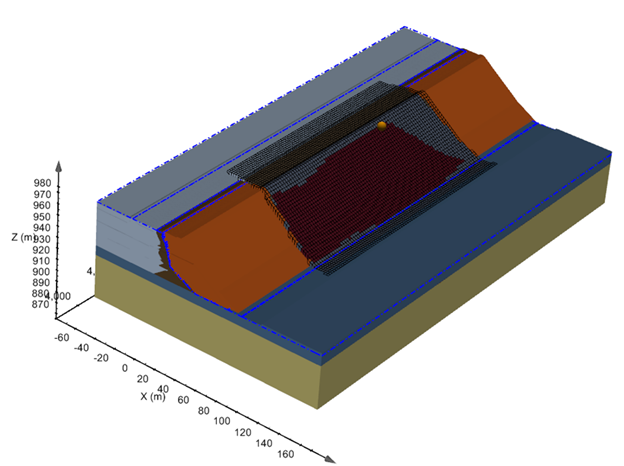
3D limit-equilibrium stability model of the Mt. Polley embankment and foundation.
CASE 02

Mt. Polley Forensic Stability Analysis

2016 · Independent review of 3D back-analysis

An independent review of the numerical modeling behind the Mt. Polley tailings-dam failure of August 2014. The Independent Expert Panel (Morgenstern et al., 2015) had back-analyzed the failure using 2D limit-equilibrium, shear-strength-reduction, and 3D limit-equilibrium methods; this study re-examined that work — with a particular focus on the 3D modeling — to test whether the panel’s conclusions were fully supported across all of the numerical models.

3D Limit EquilibriumBack-AnalysisForensicIndependent Review
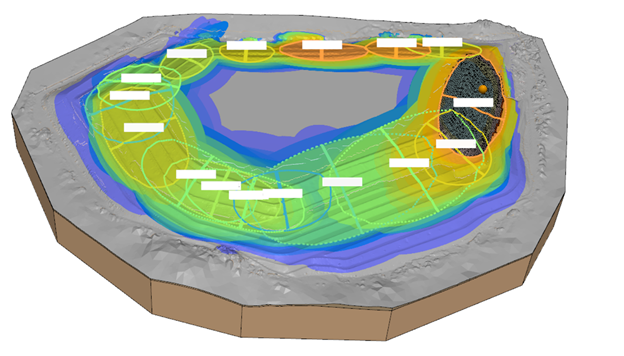
3D factor-of-safety contour model of a tailings storage facility, showing candidate slip surfaces.
CASE 03

3D TSF Stability Analysis

2019 · 3D limit-equilibrium + calibrated seepage

A present-day, spatially-3D stability assessment of a tailings storage facility, expressed as factor of safety by the limit-equilibrium method. A 3D unsaturated/saturated seepage model was calibrated to measured pore-water pressures to sharpen how those pressures enter the stability calculation, and the coupled seepage-and-stability models were then used to project how the factor of safety trends into the future.

3D StabilityFactor of SafetyLimit EquilibriumSeepage Calibration
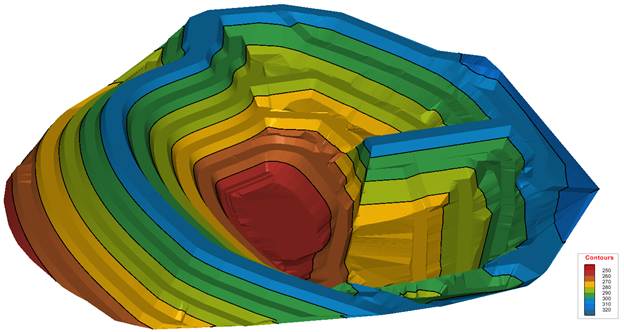
3D landform contour model of an oil-sand tailings deposit predicted by large-strain consolidation.
CASE 04

Tailings Facility Capacity Predictions

2017 · Pseudo-3D large-strain consolidation

SoilVision was engaged to model the self-weight consolidation of oil-sand tailings using a pseudo-3D large-strain consolidation model — estimating consolidation parameters and the evolving landform across the full life of a planned facility, from early deposition through cap placement to long-term settlement. The analysis tracked excess pore-water pressures, solids content, and total settlement over time, using the 3D shape to keep the final landform within design intent.

Large-Strain ConsolidationPseudo-3DOil-Sand TailingsSettlement
Start Here

Contact Us

A no-obligation conversation to understand where the firm is and where it wants to go. If there's a fit, we'll say so plainly — and if there isn't, we'll say that too.

Based inSaskatoon, SK, Canada
FocusGeotechnical firms & software companies